
Wildfire Preparedness
Wildfire-Resistant Siding: What Okanagan Homeowners Should Know
The Okanagan and Shuswap have been through some difficult wildfire seasons in recent years. It's changed how a lot of people here think about their homes — not just where they build, but what they build with. Siding is a small piece of that picture, but it's one homeowners can actually do something about.
It's usually embers, not a wall of flame
A common assumption is that homes are lost when a wildfire reaches them directly. In practice, most home losses during wildfires come from wind-blown embers landing on or against the house, sometimes well ahead of the main fire front. Embers can travel a long way and settle into gutters, vents, deck gaps, and against exterior walls — which is why the small details around a home matter as much as the big ones.
The Home Ignition Zone
FireSmart BC breaks the area around a house into zones, with the highest-impact changes closest to the building:
- Immediate zone (0–1.5m): the area right against your walls. This is where a non-combustible surface matters most — no mulch, woodpiles, or dry vegetation touching the siding.
- Zone 1 (1.5–10m): fire-resistant landscaping, mowed grass, and spacing between shrubs and trees.
- Zone 2 (10–30m): thinning and spacing of larger trees to slow a fire's approach.
Siding sits right at the edge of that immediate zone, which is exactly where embers are most likely to make contact.
How different siding materials hold up
Not all siding responds to heat and embers the same way:
- Vinyl siding can soften and melt under high heat, which exposes the wall assembly underneath. It's a fine everyday material, but it offers very little protection in a wildfire scenario.
- Untreated wood and cedar siding is combustible by nature — the same qualities that give it its look and warmth also make it more vulnerable.
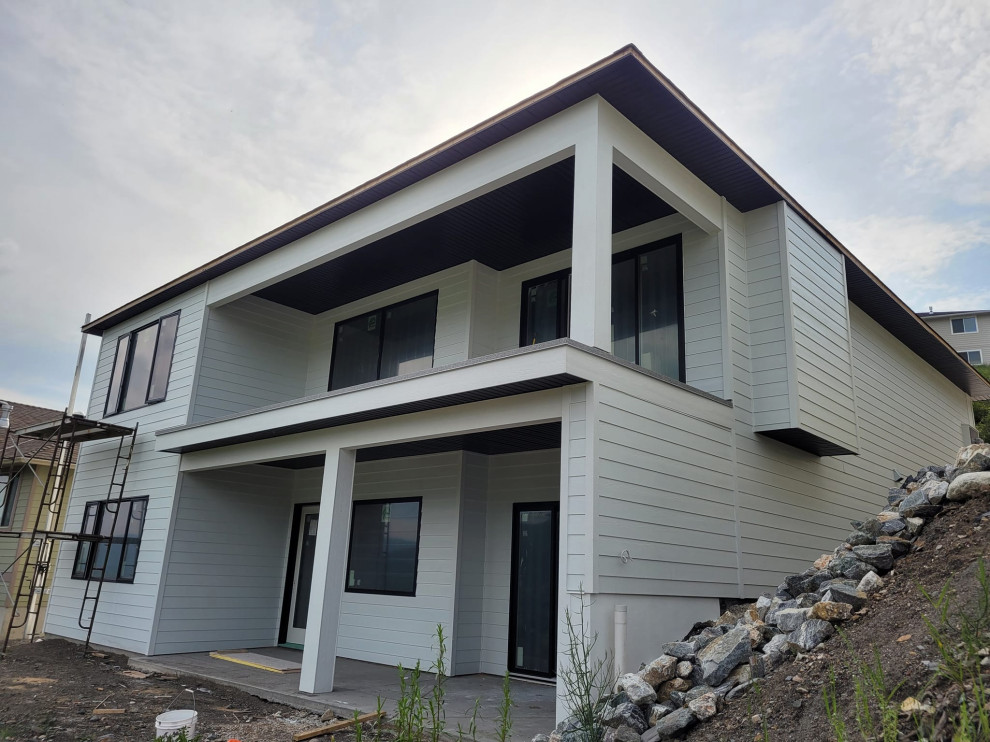
- Hardie fiber cement, stucco, brick, and metal siding are non-combustible or highly ignition-resistant, and are the materials FireSmart guidance points to when siding is being replaced with wildfire risk in mind.
This doesn't mean every home needs to switch materials tomorrow — but it's worth knowing where your current siding sits on that scale, especially if a repair or replacement is already coming up.
Beyond the siding material itself
A few other details make a real difference and are worth checking regardless of what your siding is made of:
- Keep gutters and roof valleys clear of dry leaves and needles — a common place embers collect.
- Use ember-resistant, metal mesh venting rather than open or plastic vents.
- Don't stack firewood, lumber, or store propane tanks directly against exterior walls.
- Where a wood fence meets the house, a non-combustible section or metal gate breaks the direct path a fire could take along the fence line to your walls.
Where we fit in
We install Hardie fiber cement siding alongside vinyl, cedar, and wood — so if a repair or full residiing has you thinking about wildfire resistance as one factor in the decision, it's a conversation we can have on your free quote call. No pressure either way; it's your home and your call on what's right for it.
Thinking about a siding upgrade?
Call or send us your project details — free quote, no obligation.
Get a free quote